
Amazon’s operational scale introduces multiple risk factors that can impact both profitability and customer satisfaction. A structured risk model is necessary to identify, prioritize, and mitigate these risks.
Risk avoidance should aim to avoid Amazon’s complex fulfillment system from being a repeating profitability and service quality issue. Risk is calculated as Risk Score = Probability × Impact. Probability ranges from 0.00 to 1.00, with impact ranging from 1 to 10. This framework translates operational considerations into a prioritized list. The risks are increased cost of service, late delivery, competition from AWS, marketplace quality, and infrastructure. These risks are important for Amazon because their business model is based on scale. When scale is inefficient, small problems can have big financial consequences.
A risk diagram should show each risk in terms of probability, impact, and risk score. A heat map or bubble chart would work well as it can display which risks fall in the high probability, high impact category. We care about this because we don’t treat all risks equally. High risks need to be prevented or designed out. Moderate risks need to be controlled. Low-scoring risks can be accepted if the cost of prevention outweighs the potential business impacts.
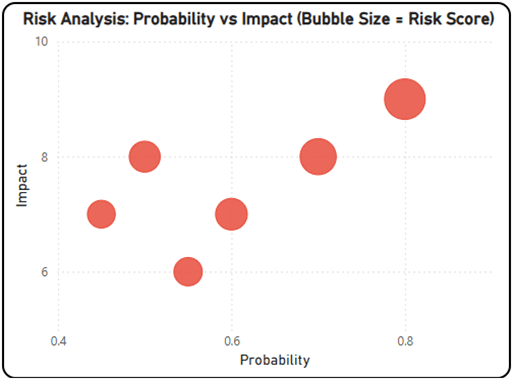
Figure 1: Risk Analysis Showing Probability vs Impact with Bubble Size Representing Risk Score (Power BI)
Predictive fulfillment control is the best advice. Amazon should harmonize inventory location, forecasts, supplier and route performance, and customer returns. Business intelligence can anticipate cost pressure before it affects customer experience. Amazon’s financials indicate that the company can afford to pay for predictive analytics rather than letting problems with the purchase experience erode margin (Amazon.com, Inc., 2016). The risk model also enhances accountability, as each risk factor is assigned a numerical risk score and an action category. This avoids a “fuzzy” analysis. It also provides a managerial foundation for determining what operational risks need to be corrected and what risks can be managed by monitoring.


Leave a comment