
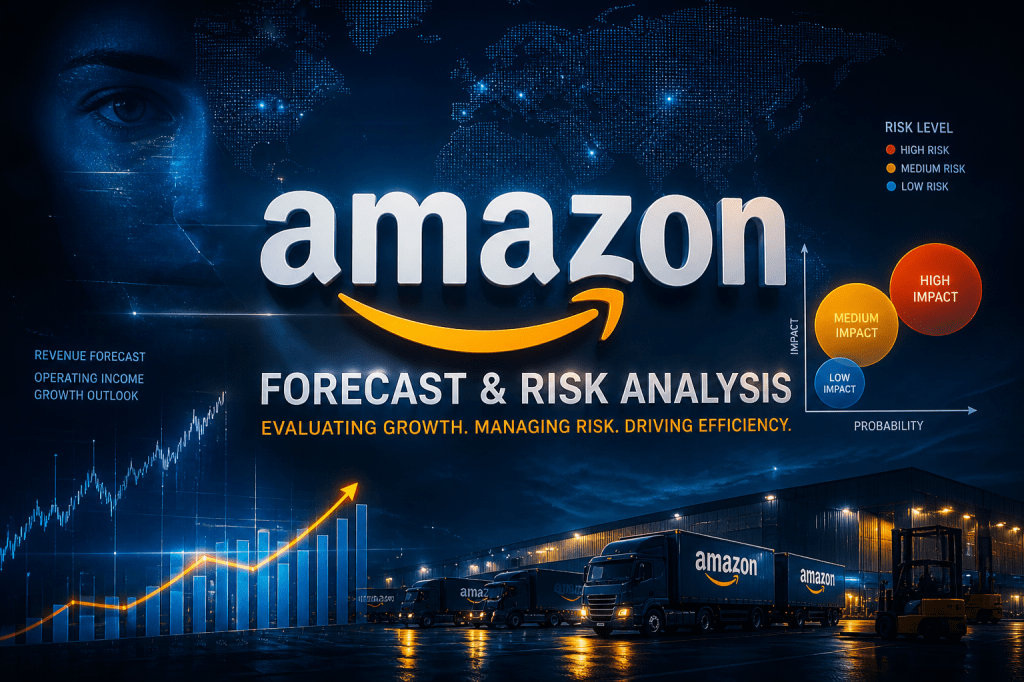
Amazon’s continued growth presents a strong financial outlook; however, long-term sustainability depends on operational efficiency rather than revenue expansion alone. This analysis examines how fulfillment costs, delivery performance, and operational inefficiencies can impact profitability over time.
Amazon faces a Piaggio-style warning signal in the relationship between fulfillment intensity, service speed, and margin protection. Like Piaggio, Amazon is not facing a sudden loss of sales. The greater risk is that poor operational management could transform scale into a cost drain. Piaggio suffered after quality issues, cost misalignment, and lagging responsiveness eroded the brand. Amazon’s similar business intelligence concern is that the growth in costs of product fulfillment, pressure on delivery, and operational bugs may diminish the value generated from AWS, advertising, and scale. Amazon had 2024 net sales of $638.0 billion and operating income of $68.6 billion, which shows that the current performance is good, while small declines in efficiency can have a large impact on the bottom line (Amazon.com, Inc., 2025).
The forecast model should present historic revenue, forecast revenue, base operating income, and risk-adjusted operating income. This format reveals if revenue growth can mask declining profit conversion. The key insight of the analysis is that Amazon can grow revenue but not profit if efficiency in the delivery process is not improved. The end of the world would not necessarily involve lost revenue. It could start with increased shipping costs, avoidable returns, escalated support in customer service, and rework in the warehouse that decrease the profitability of each additional dollar of growth.
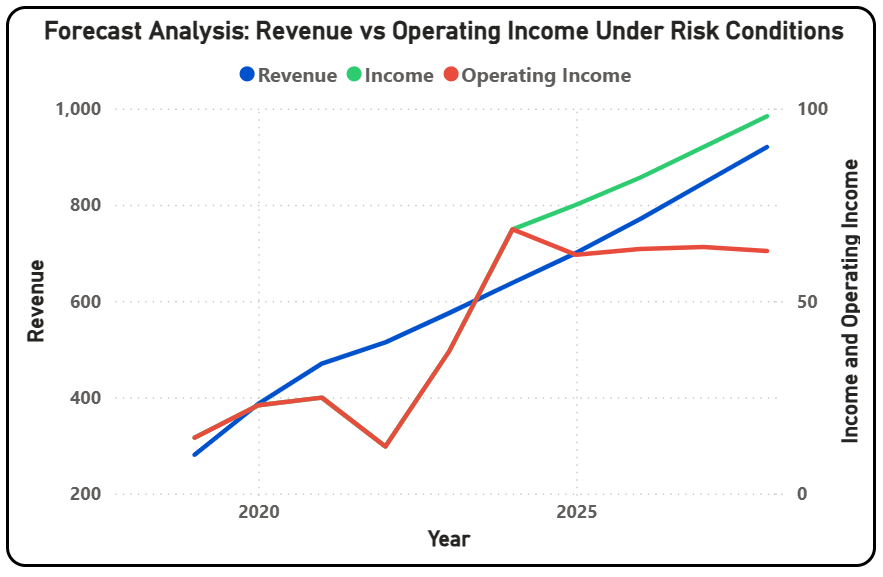
Figure 1: Forecast Analysis Showing Revenue, Operating Income, and Risk-Adjusted Income (Power BI)
The forecast visualization in Figure 1 highlights the relationship between revenue growth and operating income under normal and risk-adjusted conditions. While revenue continues to increase steadily, operating income is significantly impacted by fulfillment costs and operational inefficiencies. The gap between operating income and risk-adjusted income demonstrates how external pressures, such as delivery delays and cost inflation, can reduce profitability over time.
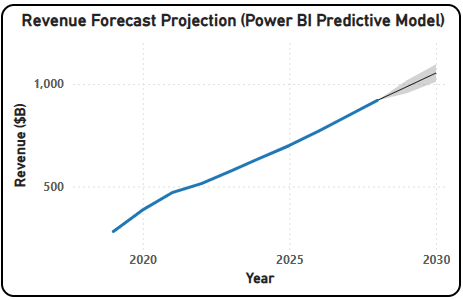
Figure 2: Revenue Forecast Projection Using Power BI Predictive Model
The predictive forecast in Figure 2extends the revenue trend into future periods, providing insight into expected growth under current conditions. The model assumes that historical growth patterns will continue; however, it does not fully account for operational risks such as increased fulfillment costs or delivery inefficiencies. As a result, while revenue is projected to increase, profitability may be constrained if risk factors are not effectively managed.
This forecast provides management with a view of the difference between the forecast baseline and the forecast risk-adjusted. If risk-adjusted operating income is not growing while revenue is growing, then the quality of growth is suffering. Management should then drill down into cost per order, regional fill rates, returns, route constraints, and defects before the problem becomes a strategic issue. That is why the forecast analysis is not a revenue forecast. It is a sustainability test. The forecast should be able to show if future growth is sustainable while facing pressure. The best forecast for Amazon should therefore not be the amount the company is expected to sell, but the operating income the company is expected to keep under fulfillment stress.


Leave a comment